
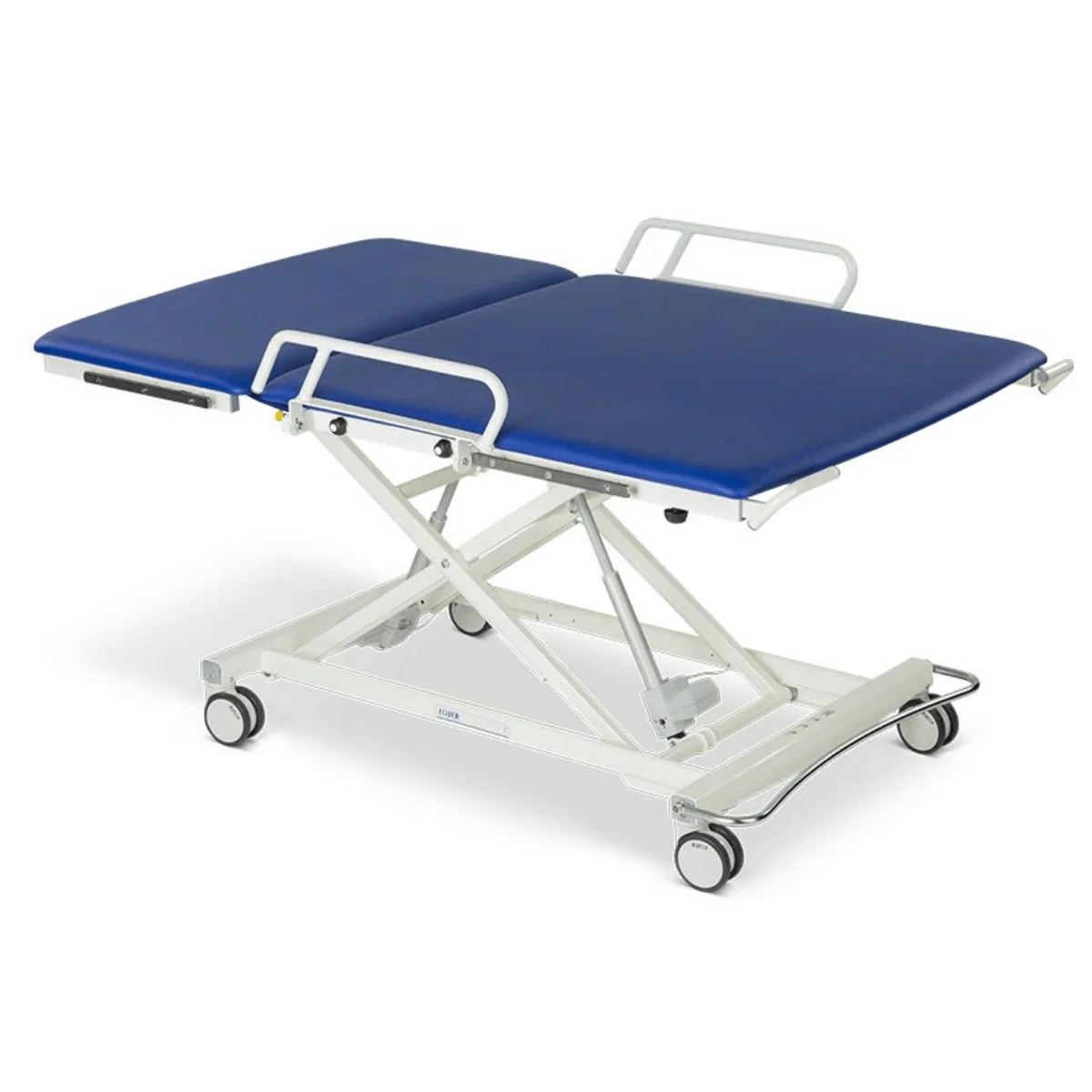
Wide, stable electric mat platform for Bobath neuro-developmental therapy, mat work and paediatric rehabilitation. Spacious padded surface for treatment in lying, sitting, kneeling, crawling and transitional positions, with room for the therapist to work alongside the patient.
Overview
The Bobath Mat Platform is a wide, stable rehabilitation platform designed for neurological physiotherapy, Bobath therapy, movement training and functional rehabilitation. Its spacious treatment surface lets the therapist work safely alongside the patient during assisted exercises, positioning, balance activities and mobility training.
It provides a secure, comfortable environment for patients who need supported treatment in lying, sitting, kneeling, crawling or transitional positions, and its broad design lets therapists perform hands-on techniques without restricting the patient’s movement.
The platform suits physiotherapy clinics, hospitals, neurological rehabilitation centres, paediatric therapy units, occupational therapy departments and long-term care facilities.
Key Features
Technical Specifications
| Primary use | Bobath therapy, mat-based rehabilitation, positioning, mobility and postural training |
| Platform design | Wide, stable treatment surface |
| Height adjustment | Electric |
| Treatment positions | Supine, prone, side-lying, sitting, kneeling, crawling and supported transitional positions |
| Treatment surface | Padded upholstered mat |
| Upholstery | Healthcare-grade, easy-clean |
| Frame | Durable clinical-use frame |
| Condition | Guidance |
| Stroke and hemiplegia | Begin with supported positioning and simple movements, progressing from rolling and sitting balance to reaching and transfers. Monitor fatigue and shoulder discomfort. |
| Cerebral palsy | Use age-appropriate, play-based exercises. Maintain safe alignment and avoid forcing a restricted joint or abnormal movement pattern. |
| Traumatic brain injury | Use short, structured sessions with clear instructions; reduce distractions and monitor alertness, dizziness, fatigue and impulsive movement. |
| Spinal cord injury | Confirm medical clearance and skin protection needs; use appropriate assistance and inspect pressure areas after treatment. |
| Multiple sclerosis | Apply energy-conservation principles, avoid excessive heat or over-fatigue, schedule rest periods and stop if symptoms worsen. |
Treatment is planned and supervised by the treating therapist.
Clinical Protocols
Recommended starting parameters by indication. Final protocols should be set by the treating clinician.
Related Products
Request a demo, pricing or clinical consultation. Our team responds within one business day.